
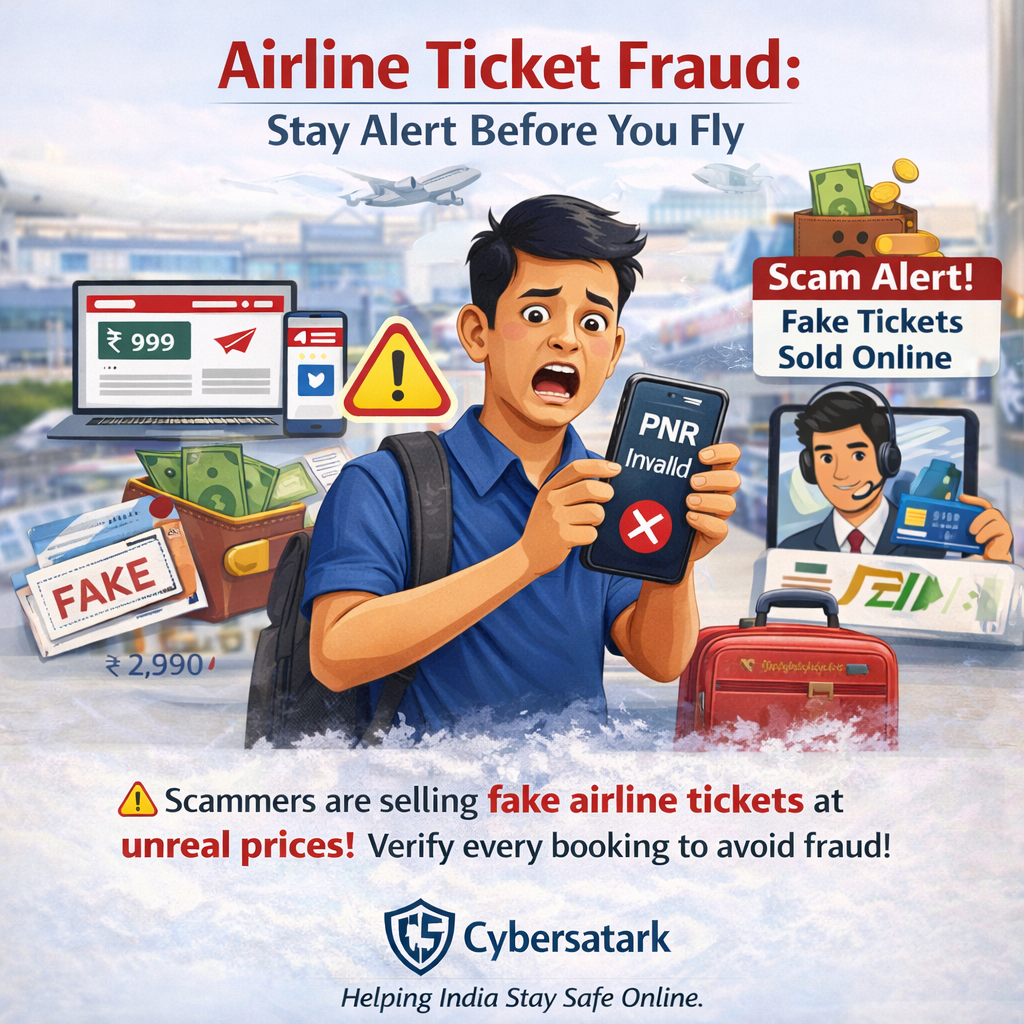
Airline Ticket Fraud: Traveling by air has become easier, faster, and more affordable than ever before. A few taps on a smartphone or clicks on a laptop and you have your flight ticket in hand. But while technology has simplified travel, it has also created new opportunities for criminals. Airline ticket fraud — scams targeting people buying flight tickets — is on the rise, and unsuspecting travelers lose money, personal information, or both.
In the race to get cheap deals, many travelers overlook basic safety precautions. The result? Millions of rupees lost to fraudulent transactions every year. Understanding how these frauds work and how to protect yourself can save not just money but also travel plans and peace of mind.
What Is Airline Ticket Fraud?
Airline ticket fraud occurs when a scammer tricks a traveler into buying a fake, invalid, or stolen airline ticket. These tickets may appear perfectly legitimate — complete with flight numbers, booking references, and boarding passes — but they cannot be used to board a flight. Fraud can also involve stolen credit cards, fake travel agents, cloned websites, and bogus discount offers.
The damage is twofold:
- Financial loss — the victim pays for a ticket they can’t use.
- Personal data theft — sensitive information like passport numbers and payment details may be stolen and misused.
Why This Fraud Is Growing
According to the Reserve Bank of India (RBI), financial frauds linked to online transactions crossed ₹1.25 lakh crore in recent years, and ticket booking scams form part of this trend. As air travel rebounds after pandemic restrictions, more people are booking online — and fraudsters are following the money.
Some key factors behind the rise:
- High volume of online ticket purchases
- Proliferation of travel aggregators and third-party sellers
- Sophisticated phishing and fake websites
- Rush to get deals without proper verification
Real Cases of Airline Ticket Fraud
1. The “Too Good to Be True” Fare
In late 2024, a traveler in Mumbai saw a Facebook ad promising return flight tickets to Delhi for ₹2,500. The URL looked convincing, with airline logos and “customer reviews.” After paying via UPI, the victim received a “confirmation email” with a booking reference. But when he tried to check in at the airport, the airline had no record of his ticket. He had lost ₹2,500 and had to buy a last-minute ticket at full fare.
Lesson: Fake ticket sites often use airline branding and social media ads to appear legitimate. Always verify booking directly with the airline.
2. The Bogus Travel Agent
A Delhi professional planning a business trip was contacted on WhatsApp by someone claiming to be a travel agent offering “corporate discounts.” After sharing his details and paying ₹12,000 via bank transfer, he received a PDF that looked like a ticket. At the airport, the ticket was declared invalid. Investigators later determined the “agent” was using cloned ticket templates.
Lesson: Never trust travel deals initiated through WhatsApp or unknown contacts — especially with direct bank transfers.
3. Phishing That Almost Cost ₹75,000
An engineer from Bengaluru received an email saying his airline booking required “urgent payment verification” or it would be canceled. The email looked genuine, complete with an airline logo and formatting. The link led to a fake site that harvested his credit card details. Before he completed payment, his bank’s fraud detection flagged unusual activity and blocked the card, potentially saving him a ₹75,000 loss.
Lesson: Emails that push urgency and ask for payment details are often phishing scams. Always log in directly to the airline website to verify booking status.
4. Stolen Ticket Resale
In Hyderabad, students looking for festival-season discounted flights were offered valid-looking tickets on a resale platform. After payment, some students were able to check in online — but when they reached the airport, the airline canceled the tickets because they had been booked originally with a stolen credit card. Several students lost between ₹8,000 and ₹15,000 each.
Lesson: Resold tickets may look real — but if they were originally purchased with stolen cards, airlines will cancel them once discovered.
Common Airline Ticket Fraud Scams
Here are some of the most frequently reported patterns:
1. Fake Booking Websites
Criminals create clone versions of airline or travel portal sites with slightly altered URLs.
2. Fraudulent Travel Agents on Social Media
Scammers use platforms like WhatsApp and Instagram to offer fake deals.
3. Phishing Emails/SMS
Links that lead to fake login pages that steal credentials.
4. Stolen Ticket Resales
Tickets initially bought with stolen credit cards resold to unsuspecting buyers.
How to Protect Yourself
The good news? Most airline ticket frauds are preventable with awareness and care.
✔ Book Through Official Channels
Use the airline’s official site or well-known travel portals (MakeMyTrip, Cleartrip, Yatra). Verify the URL carefully — a legitimate site will have HTTPS and no spelling variations.
✔ Verify Booking With the Airline
After booking, verify the ticket directly with the airline using the PNR (Passenger Name Record) on its official portal or customer care.
✔ Avoid Unverified Social Media Deals
Treat unexpected travel offers from social media with skepticism.
✔ Protect Personal Information
Never enter passport numbers or credit card details on sites you cannot verify.
✔ Use Secure Payments
Prefer payments via trusted gateways like UPI through official apps or verified card processors. Avoid direct bank transfers to unknown accounts.
✔ Be Wary of Email/SMS Links
Do not click on links in unsolicited messages claiming to be from airlines — instead, open the official app/website manually.
What to Do If You Suspect Fraud
If you think you’ve encountered airline ticket fraud:
- Contact your bank immediately to block payments or cards.
- Call the airline’s customer support to check the ticket status.
- Report the matter to cybercrime.gov.in — the Government of India’s portal for online financial fraud complaints.
- File a police complaint if necessary.
Quick action increases the chance of recovery.
Final Takeaway: Awareness Protects You
Airline ticket fraud can happen to anyone, but prepared travelers lose less. Technology has empowered scammers, but it also gives you tools to verify, authenticate, and safeguard your bookings.
Remember:
Official channels + careful verification + secure payments = travel peace of mind.
When you buy a ticket next time, don’t just look for the cheapest deal — make sure it’s also the safest.