
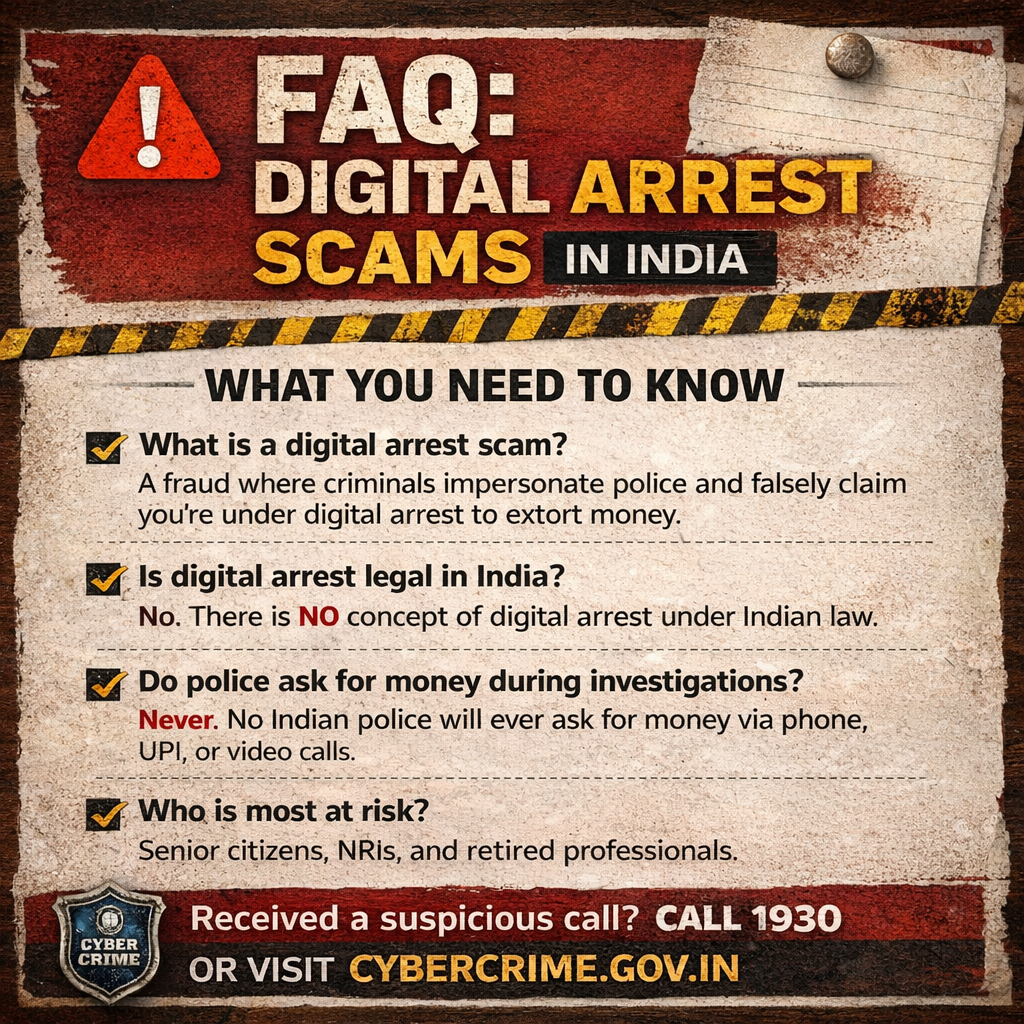
Digital Arrest Scams in India: Case Study-India’s rapid shift to digital payments and online services has given rise to a new and disturbing cybercrime trend — “digital arrest” scams. These frauds don’t rely on hacking technology but on something far more dangerous: fear and authority manipulation.
This case study highlights how an ordinary Indian citizen became a victim — and why thousands more remain at risk.
Case Study: Inside a Real Digital Arrest Scam
In January 2024, Rakesh Verma (name changed), a 62-year-old retired government engineer from Pune, received a phone call claiming to be from a courier company. The caller said a parcel sent in Verma’s name to Malaysia had been seized for containing illegal items.
Moments later, the call was “escalated” to a man posing as a senior officer from the Mumbai Cyber Crime Cell.
What followed was a textbook digital arrest scam.
The fake officer informed Verma that he was under “digital arrest” and was being monitored for money laundering and identity fraud. He was instructed not to disconnect the call, not to contact family members, and not to seek legal advice — or face immediate physical arrest.
To make the threat believable, the scammers:
- Used official-sounding case numbers
- Displayed fake police ID cards on video call
- Created a sense of urgency and legal panic
There is no legal concept of digital arrest in India, but the term sounds credible enough to confuse unsuspecting victims.
Isolation, Surveillance, and Psychological Pressure
Over the next 48 hours, Verma was kept on continuous video calls. He was told to always keep his phone camera on as part of “official monitoring.” Sleep deprivation, fear of public humiliation, and repeated threats broke down his resistance.
The scammers then claimed his bank accounts needed “verification” to prove the money was not linked to criminal activity.
Under pressure, Verma transferred funds to what he believed were government escrow accounts.
In total, ₹38 lakh — his lifetime savings — was lost through UPI and RTGS transfers.
How the Scam Was Exposed
The fraud unraveled when Verma’s daughter visited his home after repeated unanswered calls. When she demanded to speak to the so-called officers, the video call ended abruptly.
All contact numbers were switched off.
A complaint was immediately filed via the 1930 cybercrime helpline, but the funds had already moved through multiple mule accounts — a common tactic in such scams.
Why Digital Arrest Scams Are Rising in India
According to cybercrime officials, digital arrest scams surged sharply in 2023–24, particularly targeting:
- Senior citizens
- Retired professionals
- NRIs and high-value account holders
These scams succeed because they weaponize fear, authority, and isolation rather than technical loopholes.
Key Lesson
If fear is used to stop, you from talking to family or verifying facts — it is almost always a scam.