
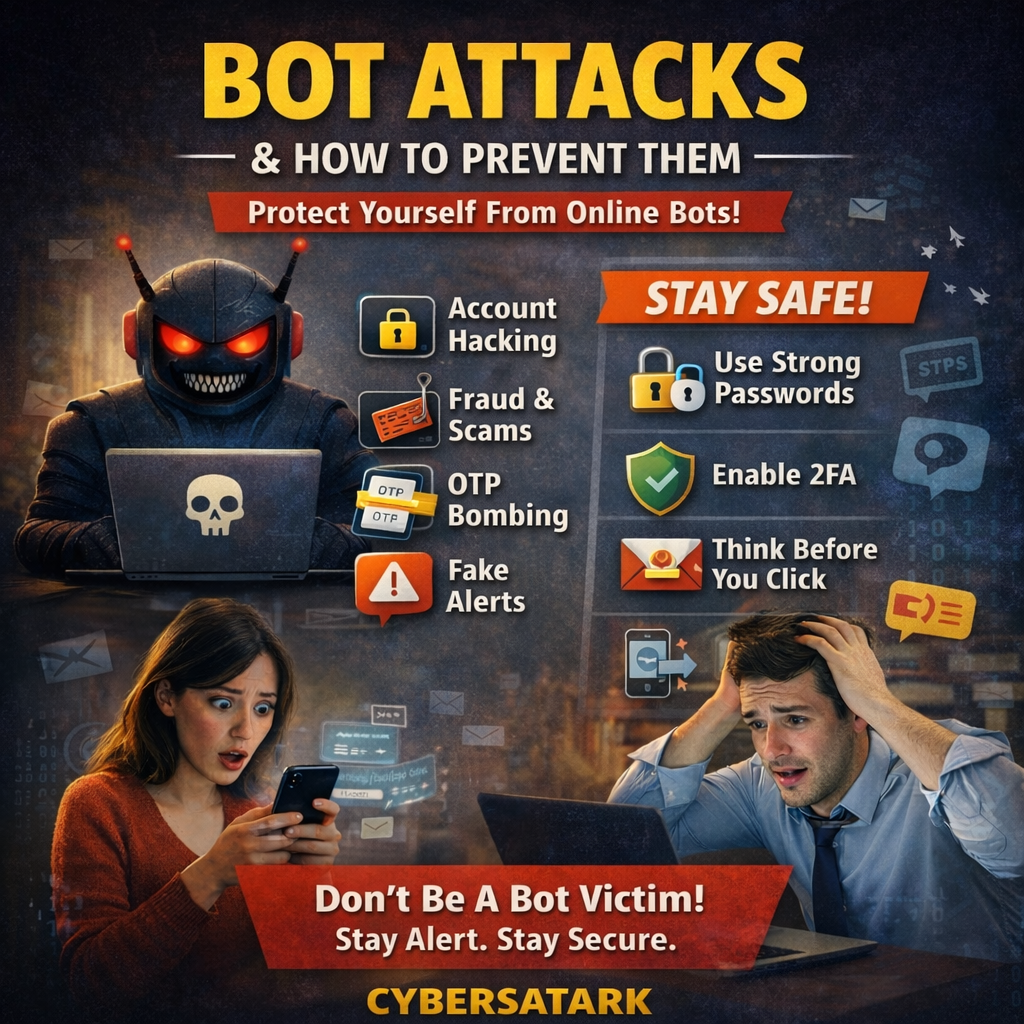
Bot Attacks and How to Prevent Them: A Growing Threat to the General Public
In today’s digital world, cyber-attacks are no longer limited to big corporations or governments. Ordinary people—using smartphones, social media, online banking, and shopping apps—are increasingly becoming targets. One of the most common and fast-growing threats behind many cybercrimes is bot attacks.
At Cybersatark, our mission is to spread cyber awareness and help people stay safe online. Understanding bot attacks is an important step toward protecting yourself and your family.
What Are Bot Attacks?
A bot is an automated software program designed to perform tasks repeatedly. While some bots are helpful (like search engine crawlers), malicious bots are created by cybercriminals to carry out attacks at scale.
When thousands or even millions of these bots work together under the control of hackers, they form what is known as a botnet.
These botnets can:
- Steal personal data
- Spread malware
- Attempt fraud
- Overwhelm websites and apps
The dangerous part is that bot attacks often happen silently, without the user realizing anything is wrong.
Common Types of Bot Attacks Affecting the Public
1. Credential Stuffing Attacks
Bots use leaked usernames and passwords from old data breaches and automatically try them on:
- Banking apps
- Email accounts
- Social media
- Shopping websites
Because many people reuse passwords, these attacks are highly successful.
2. Fake Login Attempts and Account Takeover
Bots repeatedly try to log in until they succeed. Once inside, attackers can:
- Drain wallets
- Make fraudulent purchases
- Lock users out of their own accounts
3. OTP and SMS Bombing
Some bots abuse login systems to send thousands of OTPs or messages, causing:
- Confusion
- Panic
- Missed genuine alerts
This is often used to distract users while fraud happens in the background.
4. Fake Traffic and Scam Ads
Bots generate fake clicks and views on:
- Scam advertisements
- Fake job portals
- Fraud investment links
This indirectly exposes the public to financial scams and phishing.
5. Social Media Bot Attacks
Fake accounts powered by bots:
- Spread misinformation
- Push scam links
- Impersonate real people or brands
These attacks are increasingly used to manipulate opinions and trick users.
How Bot Attacks Impact the General Public
Bot attacks are not just “technical issues.” Their real-world impact includes:
- Financial loss from fraudulent transactions
- Loss of control over personal accounts
- Identity theft and misuse of personal data
- Mental stress and loss of trust in digital platforms
- Mobile numbers and emails getting flooded with spam
Many victims only realize the attack after money is lost.
What Can the General Public Do to Stay Safe?
The good news is that you don’t need to be a tech expert to protect yourself. Simple habits make a huge difference.
1. Never Reuse Passwords
Use different passwords for:
- Banking
- Social media
A password manager can help you do this easily.
2. Enable Two-Factor Authentication (2FA)
Always turn on:
- SMS OTP
- Authenticator apps
- Biometric login
Even if bots guess your password, 2FA can stop them.
3. Be Alert to Unusual Activity
Watch out for:
- OTPs you didn’t request
- Login alerts from unknown locations
- Sudden password reset emails
Act immediately if something feels wrong.
4. Avoid Clicking Unknown Links
Bot-driven scams often rely on urgency:
- “Account blocked”
- “Offer expiring”
- “Suspicious login”
Pause. Verify. Do not click in panic.
5. Keep Devices Updated
Software updates fix security gaps that bots exploit. Always:
- Update your phone
- Update apps
- Update your browser
6. Limit Public Sharing of Personal Data
Avoid posting:
- Mobile numbers
- Email IDs
- Date of birth
- Travel plans
Bots scrape public information to design better attacks.
Final Thoughts
Bot attacks are invisible, fast, and widespread—but they are not unbeatable. Most successful attacks happen because of small, avoidable mistakes.
By staying alert, using basic security practices, and spreading awareness, the public can significantly reduce the impact of bot-driven cyber-attacks.
Cyber safety is no longer optional, it is essential.