
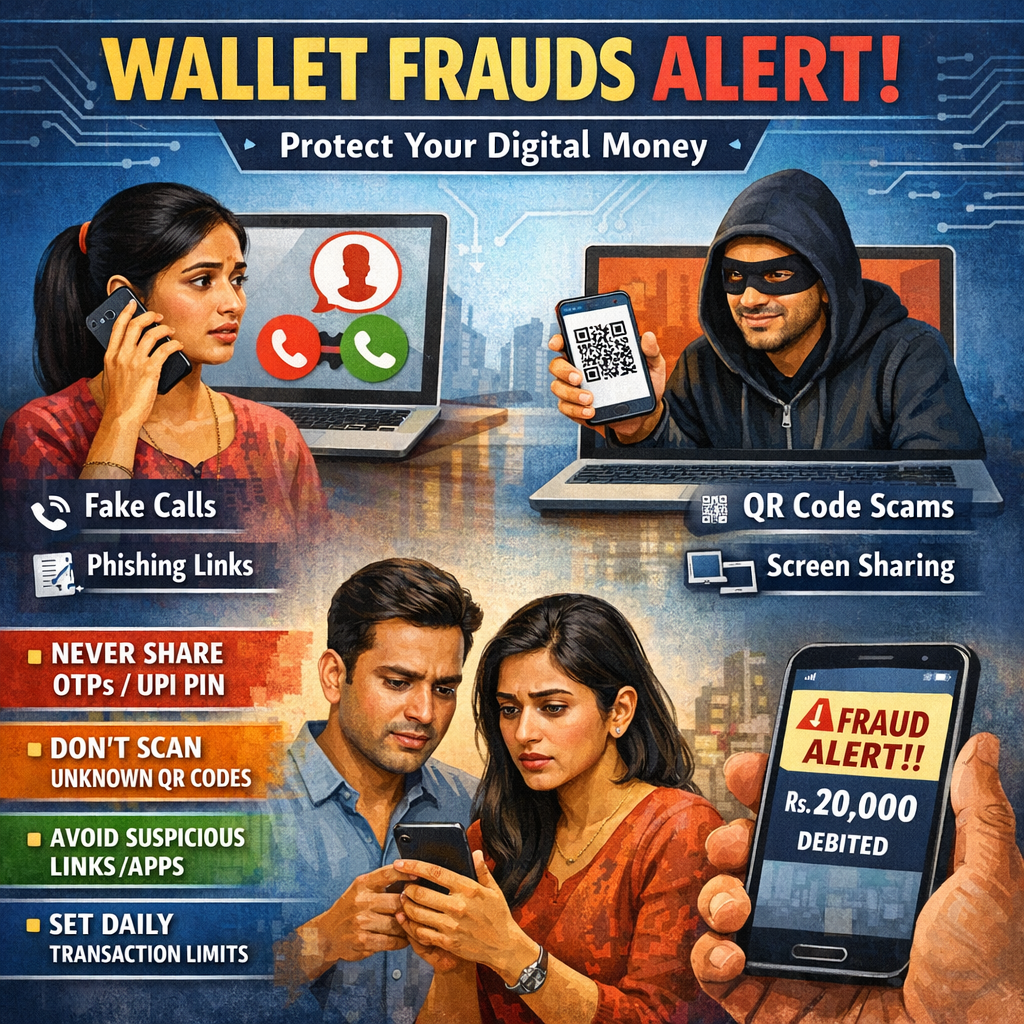
Wallet Frauds: How Digital Wallet Scams Work and How You Can Stay Safe
Digital wallets have made everyday payments incredibly simple. Paying for groceries, booking cabs, splitting bills, or shopping online now takes just a few seconds. Apps like Google Pay, PhonePe, Paytm, and others are used by millions of Indians every day.
However, as digital payments have grown, wallet-related frauds have grown alongside them.
Recent data shared by banking regulators and law-enforcement agencies shows a steady rise in digital payment frauds in India, with UPI and wallet transactions forming a significant portion. What is important to understand is this: most wallet frauds do not happen because the technology is weak, but because users are misled or rushed into making a mistake.
This article explains wallet frauds in simple language and, more importantly, how you can protect yourself.
What Is a Digital Wallet Fraud?
A digital wallet fraud occurs when money is transferred from your wallet without your genuine intention, usually after a fraudster tricks you into approving a transaction or sharing sensitive information.
In many cases, the victim technically “authorizes” the payment — but only because they were deceived.
Common Types of Wallet Frauds Seen Today
Fake Customer Support Scams
Fraudsters pose as customer care executives. Victims often find fake helpline numbers online and call them for help. The scammer then asks for an OTP, sends a payment request, or asks the victim to “verify” the wallet. Once approved, the money is gone.
QR Code Payment Frauds
Victims are told to scan a QR code to receive money or a refund. This is a key warning sign. Scanning a QR code always means you are paying, not receiving.
Screen-Sharing Scams
In this scam, victims are asked to install a screen-sharing app for “technical support.” Once installed, the fraudster can see OTPs, PIN entries, and sometimes control the phone.
Phishing Links and Fake Apps
Messages claiming rewards, cashbacks, blocked accounts, or urgent verification requests lead to fake websites or apps that steal wallet credentials.
SIM Swap Fraud
Fraudsters illegally obtain a duplicate SIM card linked to your number. Once they receive OTPs, they can access wallets and bank accounts.
Why Wallet Frauds Are Increasing
There are three major reasons behind the rise in wallet frauds:
- Rapid adoption of digital payments across all age groups
- Lack of awareness about how modern scams operate
- High trust in apps and technology, which scammers exploit
According to crime data trends, many victims realize the fraud only after the transaction is completed, often within seconds.
How to Protect Your Digital Wallet
Staying safe does not require technical knowledge. It requires awareness and discipline.
- Never Share OTPs or UPI PINs-
Banks and wallet companies never ask for OTPs, PINs, or passwords — not over calls, messages, or emails.
- Understand QR Codes Clearly-
QR codes are only for making payments, never for receiving money.
- Avoid Unknown Links and Apps
Do not click on links received through SMS, WhatsApp, or email unless you are sure of the source.
- Lock Your Phone and Wallet Apps
Use strong screen locks, enable fingerprint or face recognition, and activate app-level locks.
- Set Transaction Limits
Lower daily transaction limits reduce potential losses even if something goes wrong.
- Verify Websites and Numbers
Always use official apps or saved bookmarks. Fake websites often look real but have small spelling or domain errors.
What To Do If You Suspect Wallet Fraud
If you think something is wrong, act immediately:
- Block or log out of the wallet app
- Inform your bank and wallet provider
- Report the incident on cybercrime.gov.in
- Preserve screenshots and transaction details
Quick reporting significantly improves the chances of recovery.
Are Digital Wallets Unsafe?
No. Digital wallets use strong encryption, device binding, and multi-factor authentication. The biggest risk is social engineering, where fraudsters manipulate users into making hurried decisions.
Technology is secure — awareness is the missing layer.
Cybersatark’s Takeaway
Digital wallets are a powerful tool, but like physical wallets, they require care. One simple rule can prevent most frauds:
No genuine service provider will ever ask you to transfer money, share OTPs, or scan QR codes to receive funds.
Stay informed. Stay cautious. And help others stay safe by sharing awareness.